

One of the questions we get from business owners more than almost any other is some version of this: Am I too early to start thinking about my exit?
It comes from business owners at every stage. Three years out, ten years out, just getting started. And our answer is always the same. Exit planning is great business planning, and there's no version of this process where starting earlier works against you.
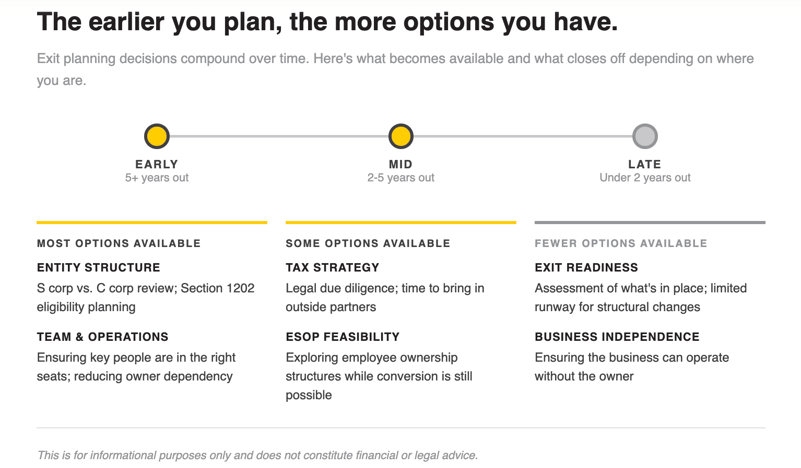
When a business owner comes to us ready to think about exiting, the first thing we do is walk through their situation together. What comes up in that process is often surprising. Entity structure, tax exposure, whether the right people are in the right seats, whether the business can actually run without them. These aren't things you should attempt to address in a six-month sprint before a sale.
We recently worked with a client who came to us on the later end of their planning. Good business, solid financial picture. But as we worked through their situation, we discovered they were structured as a C corporation. That single detail opened up a meaningful conversation around Section 1202 qualified small business stock treatment, which ultimately meant they were going to keep significantly more of what they'd built. We brought in a legal team, worked through the due diligence, and they're heading into their exit in a strong position. They had just enough runway to act on it, and that matters, because we've had versions of that same conversation where the window had already closed and the strategies that could have changed the outcome were simply off the table.
There's a similar dynamic with Employee Stock Ownership Plans (ESOPs). A client who decided to sell a portion of their company to their employees came to us at a point where, had they converted from an S corp to a C corp earlier, there would have been meaningful additional tax advantages available on the transaction. With more time, that would have been a real option. Without it, it wasn't.
Time compounds, and that's as true for exit planning decisions as it is for any investment. The choices a business owner makes five or seven years before a sale can have a significant impact on what they actually walk away with.
One thing Drew Allen mentioned in a recent conversation that stuck with me: one of our clients had been privately thinking (for quite a while) about what the next ten years might look like, but they just hadn't told anyone. That silence, that waiting until the picture was clearer before bringing in outside perspective, cost them options they would have had otherwise.
If you're a business owner and you're starting to wonder what the next chapter looks like, even if the timeline isn't firm, that's already the moment to start talking to someone. Not when the decision is made, not when an offer is on the table.
Something else we like to explore with clients is how they think about themselves. Business owner or entrepreneur? It sounds like a simple question, but the distinction matters more than people expect.
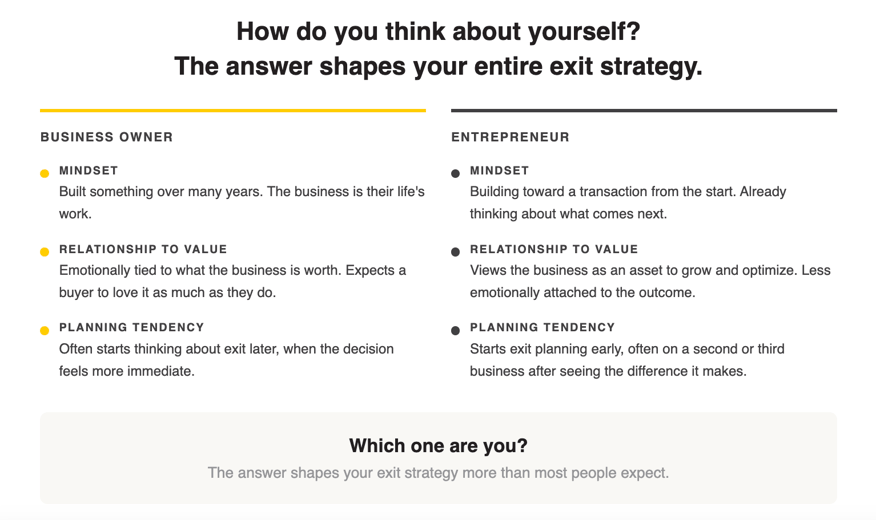
Neither is better, but being honest about which one you are shapes how the whole conversation goes.
Wherever you are in the lifecycle of your business, we'd welcome the conversation. Reach out.